Behaive modular stair railing system
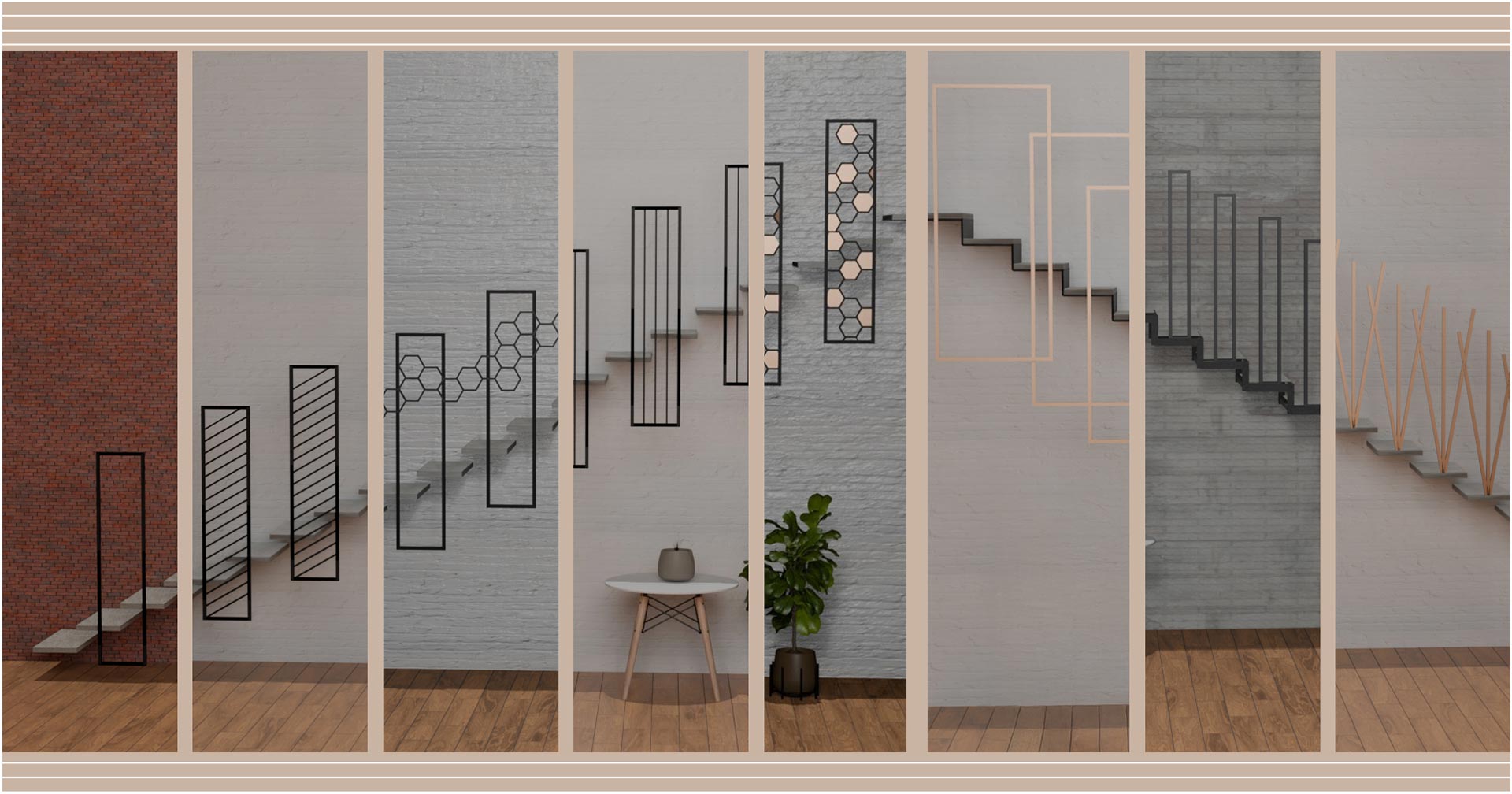
Within this project, we developed a collection of staircases and staircase railings for a client specializing in metal products. The system was designed as a modular solution that allows customers to easily order and assemble the elements themselves. A key objective of the design process was to create railing solutions adaptable to different staircase inclinations. For this reason, the railings consist of individual elements that do not connect rigidly to one another but instead allow flexible adjustment to specific spatial conditions.
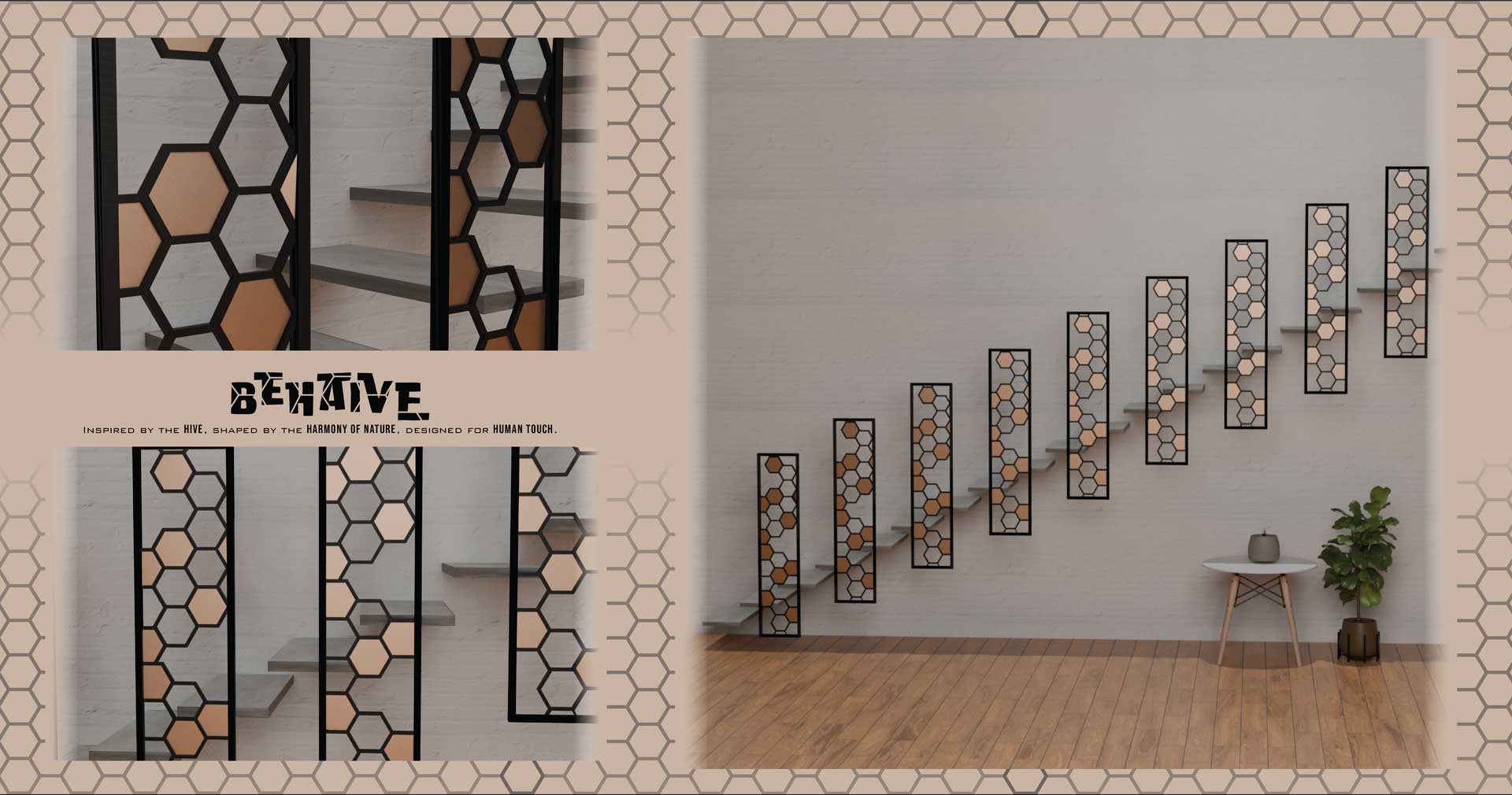
As a starting point, we developed a base railing model derived from a classic rectangular geometry, offering a universal and spatially neutral solution. The further development of the collection then focused on exploring more expressive patterns, which led to the creation of two additional models featuring a honeycomb motif, named Behaive.
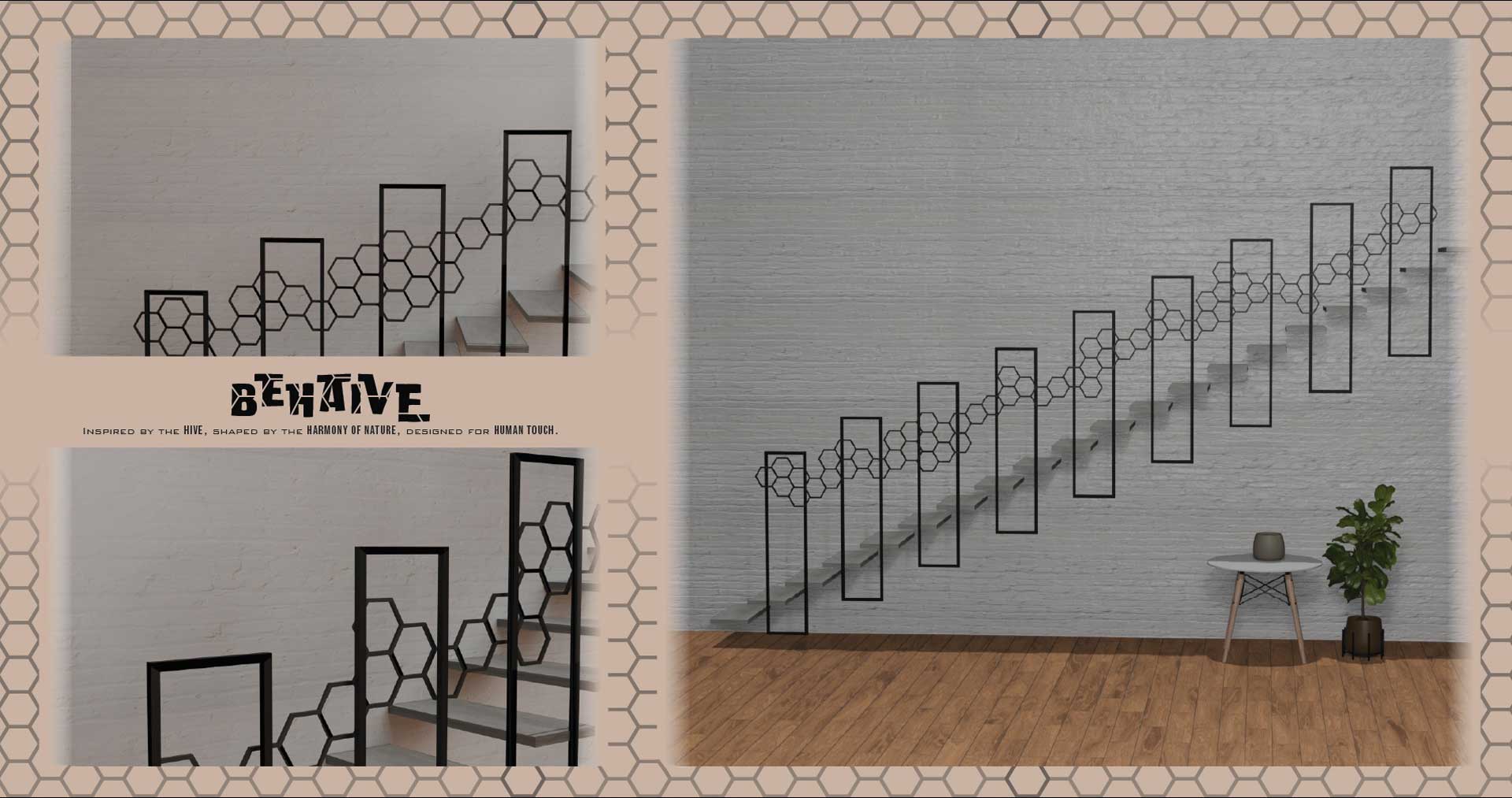
The Behaive models were designed as a response to the interplay between symmetry and visual dynamism. The geometric honeycomb structure creates a balance between order and apparent randomness, introducing a lively visual rhythm into the space. The railing system is modular, allowing optional elements such as handrails to be added as needed, while also enabling flexible combinations of different patterns within the same system.
The honeycomb motif was selected not only for its visual qualities but also for its strong presence in natural structures. This geometry is increasingly used in contemporary interior design—particularly in bathroom elements and living environments—because it softens strict linear compositions and visually opens the space.
Natural structures are rarely strictly orthogonal; instead, they are organically dynamic and composed of variations of repeating elements. This quality informed the development of the railing system. At the same time, the honeycomb form is symbolically connected to beekeeping, which traditionally represents balance, sustainability, and vitality. By incorporating this motif into the design, the intention was to subtly transfer these associations into the living environment and contribute to a higher quality of everyday spatial experience.